Showing posts with label Tree Work. Show all posts

Tuesday, January 21, 2014

Winter Tree Work

A big focus for us this winter is the removal of unhealthy trees and trees that have an adverse effect on any valuable turf areas.

Grinding stumps


In order to keep our tree population as free from disease and pests as possible, it is important to remove any trees that show irreversible signs of decline. The removal of these trees eliminates host sites for pests and removes any disease pathogens from the course. This practice will become ever more valuable as we try to fend off the approaching Emerald Ash Borer.

Another important reason to manage the tree population is to provide ideal growing conditions for trees that we deem highly valuable . Its very common to have a number of large trees planted too close to each other. Many times it is important to thin out a few of these trees to provide space for the healthier trees to mature properly.
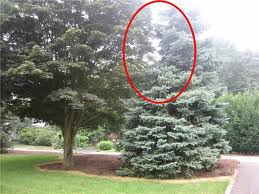
Here you can see the effects of trees planted too close. Neither of these trees will meet their full potential and one or the other will most likely have to be removed sooner than later.

Lastly, but probably most importantly, the removal of strategic trees can improve turf quality. Not only do tree roots steal valuable nutrients and moisture, but they also impede air flow and help create micro climates that are ripe for disease.

Personally, I love trees and their role on a golf course so it is important to me that we keep as many trees as we possible. It is also very important we continue to develop and implement good tree health programs so the trees we have can continue to thrive.


The guys have been working hard chipping what we have dropped over the last couple years.


Tuesday, January 22, 2013

On-Site Tree Pruning

As mentioned before, a large part of the renovation included the selective removal of trees, as well as the installation of new trees. Most of the removals were done to allow for the grading of the golf course but we also removed trees with compromised structure and health.

Once the removals had taken place and the course was grown in, we stepped back and evaluated new tree locations. Trees needed to be placed in areas where they would frame or impact the hole in a striking and fair way. Highly maintained turf sites are not ideal for trees so it was important that the tree species selected were capable of handling these areas better than others. We also wanted to choose as many native tree species as possible.

In an ideal world, we could transplant small, bare root trees and have them grow to a large size quickly, but unfortunately that is not the case. In order to make an instant impact to the golf course, we brought in trees of many differnt calipers, varying in size from 2" up to 8".

One thing that was consistent with all the trees brought in was that they would need to be pruned to assure they would grow to form and remain structurally sound. Not having alot of hands on pruning experience on the greens crew, I brought in Graham Herbst and Justin Everston from the Nebraska Forestry Department to show us how to get started.


The on-site class exceeded all my expectations. We spent time going through the concepts and philosophies of tree care. We also learned about proper tool selection, use, and care. We got hands-on experience evaluating a tree and choosing the proper pruning techiniques to use to improve it's structure. It was extremely educational and a great investment of our time.


To go into further detail about all the things we learned would take pages and pages of text. I will take the time in the future to delve into specific details of the experience. Until then, both Graham and Justin are very eager to spread the concepts of tree health throughout the community so please don't hesitate to contact them with questions or concerns. Their contact information is included below. Also, take some time to visit the Nebraska Forestry Department website: www.nfs.unl.edu/.

Graham Herbst: gherbst2@unl.edu
Justin Everston: jeverston1@unl.edu


Below is a video of the three-cut method that one would utilize when pruning or removing a structurally compromised branch.


Sunday, November 18, 2012

Moving Large Caliper Trees

Due to new tee locations on a few holes on Gray Hawk, we were forced to move some trees. Last week we fired up the 90" tree spade and, after the repair of a hydraulic leak, went through the process of moving them.

Moving trees with a trunk caliper greater than 8" is not a process I am entirely comfortable doing. Trees of this size need a much larger root system than the 90" spade is able to transplant. The removal of such a substantial chunk of the trees roots will often lead to death and always leads to a few years of stunted growth. That being said, we do own the spade and have a very capable, experienced operator, Joe Kirk, so we attempted it ourselves. In the end, if the trees don't pull through, we haven't lost too much.

I have included some pictures below of our spade and a video of the process. The video is not of our moving process but our process followed the exact same steps. If you are interested in planting trees in your own home landscape, this time of year is an excellent time.